Concerns About Public Schools
Government Cafeteria?
Just suppose for a minute that in addition to our education, government officials suddenly took it into their heads to control what we eat? Some of the big wigs figured that we common ignorant folk were not capable of making good nutritious meals, so they formed a plan and with a huge chunk of our tax dollars, built government run cafeterias (Food Distribution Centers). Sound depressing? Well, take heart, because the American people would never stand for anyone telling them what they can and cannot eat. But wait a minute....isn't this exactly the approach the government has taken with education?
Government Schooling Comes to America: The Origins of Government Schooling in the United States
The first step in understanding the state of education today is to review how government came to be the dominant force behind schooling in the United States. From the outset of the first settlements in the New World, Americans founded and successfully maintained a decentralized network of schools through the 1850s. Then, beginning in New England, a wave of change swept across the country, which soon saw states quickly abandoning the original American model of decentralized, private education in favor of government-funded and operated schools.
Common Core: A Threat to Homeschoolers?
Much of the time, public school initiatives and regulations do not affect homeschoolers. The “next big thing” in public education, called Common Core education standards, already is, however, and that influence will grow. There are three major ways this nationwide initiative affects homeschool families: curriculum, testing, and student data tracking. There are some positive things about Common Core for public school students. For homeschool families, it largely represents an intrusion into their education freedoms.
Lessons from Homeschooling
Americans are increasingly aware that government education specialists in charge of K-12 government schools are lousy educators. This awareness is prompting parents to act rationally in a way that provides the best evidence yet that education bureaucrats cannot educate namely, more and more parents are homeschooling their children.
Universal Preschool
There is a national campaign to institutionalize all preschoolers through government funded and/or mandated "universal preschool." This group seeks to redefine universal preschool as an unheralded worldwide community of loving, functional parents who exercise their right and authority to nurture and teach their young children at home.
Education In The Marketplace
Our educational systems today are based on government coercion. The fact that the student body is a captive audience frees educators from any urgent need to satisfy the wishes of their clientele. Pupils cannot "vote" with their feet; parents cannot "vote" with their tax dollars.
Saving the Children
It is sometimes said, by public school supporters, that if some children are taken out of the system to go to other schools, the public schools will deteriorate. And so, the thinking goes, parents have a "duty to society" to keep their kids in the public schools, even though they have already deteriorated almost beyond recognition. How absurd that the government schools think of the children as serving the schools' or society's needs instead of the other way around. It's not the school system that needs saving, or even reforming. It's the children who need to escape from the failing government schools and be allowed to home school or attend successful private schools, without the penalty of paying twice -- once with taxes and again for tuition.
Ten Reasons Not to Homeschool
A satirical look at the differences between public and home education.
How Home Schooling Will Change Public Education
More than 1.2 million students are now being taught at home, more students than are enrolled in the entire New York City public school system. Paul T. Hill reports on the pros and cons of learning at home—and the effects home schooling will have on public schools.
The Seduction of Homeschooling Families
Do the public school authorities feel threatened by homeschooling? Judging by their efforts to lure homeschooling families into dependence on local school districts, the answer is apparently yes. For the last several years, homeschooling has been the fastest growing educational alternative in the country. The sheer number of homeschoolers represent a distinct threat to the hegemony of the government school monopoly. Qualitatively, the academic success of homeschoolers, measured by standardized test scores and recruitment by colleges, debunk the myth that parents need to hire credentialed experts to force children to learn.
Exploring Single Black Mothers' Resistance Through Homeschooling
This work looks at contemporary Black homeschooling as a form of resistance among single Black mothers, exploring each mother's experience and perspective in deciding to homeschool and developing their practice. It faces the many issues that plague the education of Black children in America, including discipline disproportionality, frequent special education referrals, low expectations in the classroom, and the marginalization of Black parents. Most importantly, this work challenges stereotypical characterizations of who homeschools and why.
The Case for Homeschooling
Parents engaged in homeschooling often cite three primary concerns about public schools: the perceived absence of academic rigor, worries about maladjusted graduates, and the presence of an anti-religious atmosphere. Homeschool advocates contend that this educational approach successfully tackles these issues, arguing that homeschooled students perform exceptionally well, irrespective of one's educational philosophy. Proponents also maintain that private schools share similarities with public schools, albeit to a lesser extent, making them susceptible to similar criticisms. The arguments supporting homeschooling can be scrutinized through personal case histories and scholarly analysis, with this paper delving into the numerous studies conducted on various facets of homeschooling.
Public Education - Identifying the Problem: State Monopoly
When it comes to the books we read, the neighbourhood we live in, the religion or philosophy we practise, the food we eat, the people we associate with, in fact, in most areas of our lives, we highly value our freedom of choice. Yet, when it comes to one of our most precious resources--our children--parents are not permitted to exercise this necessary freedom. State interference with and control of education is greater than it is in almost any other area of personal choice.
The "Gifted and Talented" Fraud
Isn't it amazing how many five year olds go off to school as bright, curious, trusting ("gifted and talented") kids, and in a year or two become dull, angry little aliens? Parents who expect the government schools to provide high quality academic education for smart children will always be frustrated. It's simply not offered. Those parents need to understand that the public schools are intended to offer only a minimum level of academic learning -- nothing more. In fact, the employees are not even academically oriented beyond the minimum level.
Pulling Kids Out of Government Schools
Parents should take their kids out of government school because government education is not possible. "Government education" is an oxymoron. The object of teaching is the transmission of truth, which is reality. A synonym for the word “teach” is “indoctrinate.” Another good term is to “propagate” or “propagandize,” which is the teaching of any system of principles. You can see the problem with any government indoctrinating or propagandizing children. It is inherently immoral and un-American to charge the government with this responsibility.
Resources
-
 On Being a Scientist: A Guide to Responsible Conduct in Research: Third Edition
 -
 Evaluation of Health Concerns in a Public Middle School ? Virginia (Health Hazar...
 -
 Handbook on the Psychology of Pricing: 100+ effects on persuasion and influence ...
 -
 Research to Revenue: A Practical Guide to University Start-Ups (The Luther H. Ho...
 -
Life in the Marshall Islands: Then and Now
-
 A Treatise on Domestic Economy For the Use of Young Ladies at Home and at School...
 -
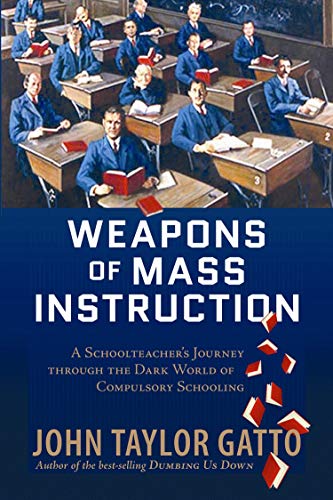
Weapons of Mass Instruction: A Schoolteacher's Journey Through the Dark Wor...
-
 Reference Manual on Scientific Evidence: Third Edition